Fabric Protection Treatments Stop Moisture Retention
Upholstery cleaning in Silverton for fabric-specific cleaning and moisture protection on furniture and soft furnishings
Upholstered furniture absorbs body oils, dust, and allergens that vacuuming cannot remove, and in humid climates like Silverton's, untreated fabric retains moisture that produces musty odors and encourages mildew growth. Fabric-specific upholstery cleaning matches cleaning methods to fiber content and construction, using controlled moisture levels that remove soil without saturating cushion foam or damaging delicate materials. PurePoint Cleaning and Restoration applies moisture protection treatment after cleaning to help fabrics resist water absorption and dry faster when exposed to humidity, addressing the conditions that cause persistent dampness in valley homes.
The cleaning process involves identifying fabric type through manufacturer tags or fiber testing, then selecting appropriate cleaning solutions and methods that remove soil without color bleeding or shrinkage. Low-moisture extraction minimizes drying time, and fabric protection treatment follows to create a barrier that prevents rapid resoiling and moisture retention.
Request upholstery cleaning to remove accumulated oils and dust while applying fabric protection before moisture issues develop.
How Fabric-Specific Methods Prevent Upholstery Damage
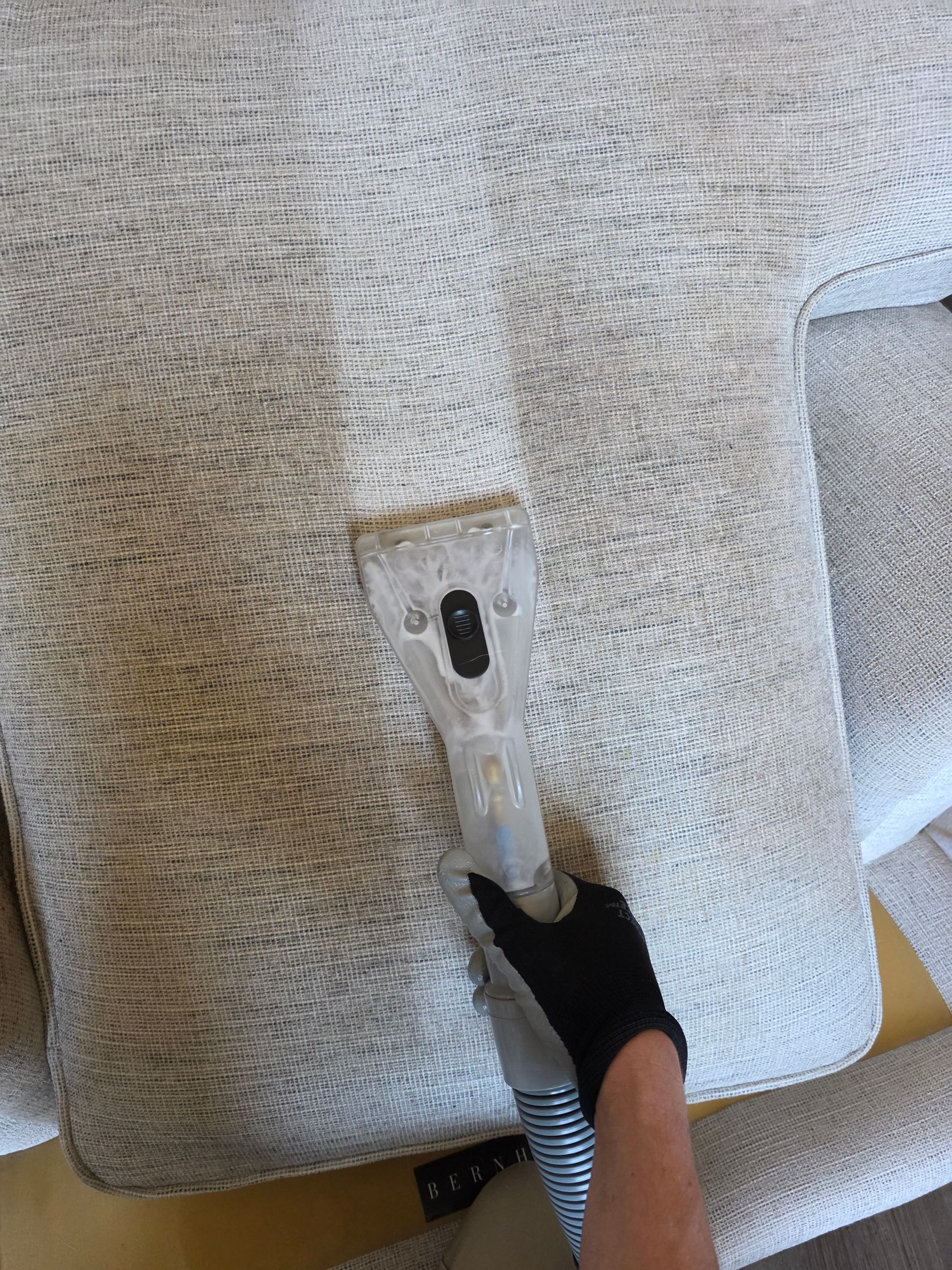
Professional upholstery cleaning requires matching moisture levels, agitation methods, and cleaning chemistry to specific fabric types because natural fibers like cotton and linen tolerate different treatments than synthetics, and delicate materials like silk or velvet require dry-solvent methods rather than water-based cleaning. Using incorrect methods causes color bleeding, shrinkage, texture distortion, or water staining that home cleaning attempts frequently produce. Fabric protection treatment applied after cleaning creates a microscopic barrier on individual fibers that causes liquids to bead rather than absorb, allowing spills to be blotted before they penetrate and making routine maintenance more effective.
After cleaning and protection treatment, upholstery that appeared dingy or discolored shows restored color clarity, and fabrics feel cleaner without stiffness or residue. Cushions that retained odors from body oils or pet contact no longer produce smell when compressed, and the musty dampness common in humid climates dissipates as treated fabrics resist moisture absorption. Professional equipment reaches crevices and tufting where soil accumulates beyond what home cleaning tools can access.
The service includes testing cleaning methods on hidden fabric areas before full application, ensuring that the approach will not damage or discolor visible surfaces. A 90-day workmanship warranty covers the cleaning process, and clear scheduling through professional booking systems eliminates appointment confusion.
What Homeowners Usually Ask About Furniture Cleaning
Upholstery cleaning requires different approaches depending on fabric type and construction, and furniture owners often need guidance about what professional cleaning involves and how it differs from home cleaning attempts.
What determines which cleaning method is safe for specific upholstery?
Manufacturer cleaning codes printed on furniture tags specify safe methods: W for water-based cleaning, S for solvent-based cleaning, WS for either method, and X for vacuum-only maintenance. Professional cleaners identify fabric content when tags are missing, testing cleaning solutions on hidden areas to verify compatibility before treating visible surfaces.
How does moisture protection treatment work after upholstery cleaning?
Moisture protection applies a fluorochemical treatment to individual fibers that causes water and oil-based liquids to bead on the surface rather than absorbing immediately. This allows spills to be blotted before staining occurs and helps fabrics dry faster when exposed to ambient humidity, reducing musty odor development in Silverton's moist climate.
Can professional cleaning remove pet odors embedded in upholstery?
Pet odor removal requires cleaning agents formulated to break down uric acid and organic compounds that cause smell, combined with sufficient contact time for chemical reaction to occur. Deep-seated odors in cushion foam may require removal and treatment of foam itself if contamination has penetrated beyond fabric surfaces.
How long does upholstery take to dry after professional cleaning?
Drying time depends on fabric type, cleaning method, and humidity levels, typically ranging from two to six hours for low-moisture cleaning of synthetic fabrics, and up to 24 hours for natural fibers cleaned with water-based methods. Proper ventilation and air circulation accelerate drying regardless of method used.
Should upholstery be cleaned before or after carpet cleaning?
Upholstery cleaning before carpet cleaning allows any soil dislodged from furniture to be removed during subsequent carpet cleaning, and prevents tracking carpet cleaning moisture onto freshly cleaned upholstery. Scheduling both services together provides consistent appearance and maximizes efficiency.
PurePoint Cleaning and Restoration offers specialized upholstery cleaning with fabric protection treatment and a 90-day workmanship warranty. Schedule furniture cleaning with transparent pricing to restore appearance and prevent moisture retention in your Silverton home.